Danielle Groeneweg

Appraisal Myths

With the current housing market, appraisals are especially important and very unpredictable.  Just recently I have dealt with a home that under appraised and a home that over appraised.  I thought it would be a good idea to inform buyers & sellers on a few Appraisal Facts. I came across this great article that discusses some of the biggest myths regarding Appraisals. This article is written by Cathie Ericson, for the full article click here. 

“Myth No. 1: An appraisal is the same thing as a home inspection

Although both the appraisal and the home inspection are used as safeguards for the buyer (and the buyer’s lender), don’t confuse the two. Home inspectors and appraisers have completely different jobs. Sure, they both poke around your home. But the inspector’s job is to uncover everything that’s problematic—or could potentially become problematic—with the home, while the appraiser’s job is to find the objective market value of the property. Got that?

To do the job, the appraiser will use comps (the same thing you used to determine your list price), but that’s just for starters. Appraisers take into account a home’s condition, square footage, and location. Appraisers also note the quality and condition of the plumbing, flooring, and electrical system. With data in hand, they make their final assessment and give their report to the lender.

Myth No. 2: The appraiser works for the buyer

The buyer pays for the appraisal, but the appraiser works for—and is hired by—the lender. It doesn’t matter if you and the buyers have agreed on a price. The buyer’s lender needs to be on board because it’s the lender’s investment, too.

But don’t fear: Even though the appraisal is meant to protect the buyer’s lender from a bad deal, appraisers are trained to be unbiased and ethical. In fact, it’s a crime to coerce or put any pressure on an appraiser to hit a certain value.

Myth No. 3: An appraisal will give you the magic number of what the buyer will pay

The appraisal process isn’t an exact science. In fact, the appraisal is only one opinion of what your home is worth. It doesn’t dictate how much the buyer should pay, or how much the seller should accept.

So what happens if the appraisal doesn’t match the contract price?

If your home is appraised lower than the price you and the buyer agreed upon, the lender isn’t going to pony up more money to make up the difference. Instead, it’ll be up to you and the buyer to figure out who pays for the shortfall. Can the buyer throw in more? Or do you, as the seller, need to cover the difference just to make the deal go through? Well, let the discussions begin.

“The seller and buyer can agree to negotiate a new purchase price to match the appraisal, or a seller might consider finding someone willing to offer cash, which doesn’t require an appraisal,” says Roberta Loughman, a real estate agent with Shorewood Real Estate in Colorado Springs, CO.

“Buyers can pay any price they determine for the house, regardless of the appraisal,” adds Janice Buchele, senior vice president of residential operations at the William Fall Group, a national provider of real estate valuation and analysis services in Toledo, OH. “The report simply provides guidance for the lender.”

Myth No. 4: The bigger the house, the higher it will appraise

Consider a supersized home built on an average-size lot in an otherwise modest neighborhood. Although the home might dwarf its neighbors, that doesn’t mean it will be appraised for that much more than neighboring homes.

The value of the home is measured as if it were similar to others in the area that would commonly be expected on that same lot, Buchele says. In fact, some people might consider the bigger home more of a burden—after all, there’s more to be heated, cooled, insured, and maintained.

Myth No. 5: The more bells and whistles, the higher the appraisal

Wait a minute: What do you mean your $100,000 investment in fancy appliances isn’t worth $100,000 extra in the appraisal? OK, take a step back. This situation can be hard for sellers to wrap their heads around. But if you’ve overly improved your space with amenities that don’t exist in surrounding homes, there’s no nearby sales data the appraiser can use to decide just what those amenities are worth.

“If no one else in the neighborhood has a home theater, then typical buyers in that neighborhood probably don’t demand a theater,” Buchele points out.

And that goes for your décor, too. You might think your home is worth more because of the impeccable vibe that you—or your stager—have given the house. But appraisers ain’t got time for decorating divas. They make a straight value judgment on the quantifiable aspects of the house—that is, the square footage, number of rooms, and other measurable data.

Myth No. 6: All amenities are created equal

If you’ve equipped your home with an in-law suite, a sexy Tiki bar, or a home exercise space that actually makes you want to work out—well, we applaud you. But if you converted your garage to do so, don’t expect the home appraiser to give you props.

Your house has a garage for a reason, points out Austin Fernald, a home appraiser in Orange County, CA. “Most people want to park their cars where they are safely protected from the elements and break-ins,” he says.

The moral of the story? Be careful any time you remove one amenity in order to add another—it might come back to bite you in the appraisal.


Do you have any other questions regarding Appraisals? Please let me know, I would be more than happy to help answer any questions!
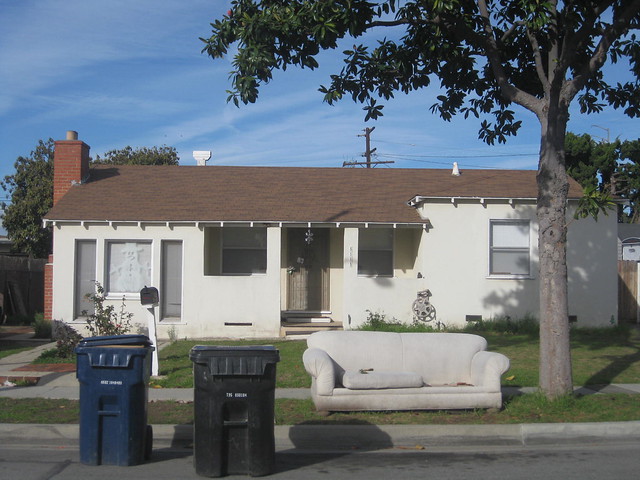
How Important is Curb Appeal?

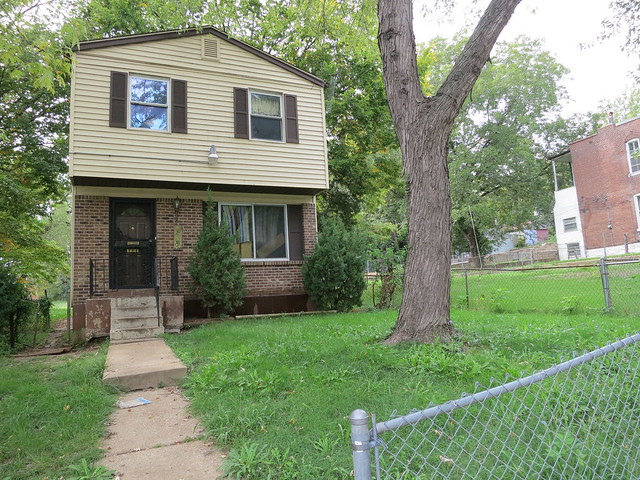
The first impression you have on a person or place definitely make a lasting impression on you. So, it should come as no surprise that buyers rate a home lots of times based on their first impression and the first thing they are going to see is the outside of the home. That is why curb appeal is so important. Angela Colley wrote a great article on Realtor.com that describes six curb appeal disasters to avoid. Here it is:

“It’s difficult to put a dollar value on your curb appeal. No one can quite agree on exactly what you’ll get for slaving away in the front yard a few weekends before you put your home up for sale.

Some estimates claim that a well-landscaped lawn could increase the value of your home by 5% to 20%. But other return on investment estimates are even larger—anywhere from 100% to even a whopping 1,000%. Whoa!

Doesn’t it make you want to break out the gardening gloves and hop to it? Good! Because if you skip bumping up your curb appeal before putting your home on the market, the only person who shows up to your open house might be your real estate agent.

Curb appeal is your home’s first impression on prospective buyers and, as we all know, first impressions matter. Make a big mistake in the presentation, and you’ll have a hard time getting buyers through the door.

But how do you know if you’re making a big mistake? It depends. Check out how close you are to these curb appeal disasters.

1. The outside doesn’t match the inside

Ugly Infill in College Hill

Paul Sableman/Flickr CC

Chain-link fence, overgrown lawn, no landscaping … even if your house is gorgeous inside, potential buyers might not be able to see its beauty if they need a weed whacker to get to the front door.

We’ll repeat it: First impressions matter. No matter how great your personality is, you wouldn’t go on a first date without brushing your teeth and hair and putting on pants (we hope). So you shouldn’t put your home on the market without a little TLC, either.

“There is nothing worse than seeing pictures of a home’s beautiful interior online only to find that they completely neglected the outside of their home,” says Liz MacDonald, Philadelphia-based home stager and host of the web series Shelf Help.

2. Overflowing (or visible) trash cans

whiteday

Charles Wagner/Flickr CC

Trash, shockingly enough, is a nonstarter for most home buyers. Obviously, garbage spilling over your lawn is a big no-no. But even the sight of trash cans on the curb can be a turnoff.

“Make sure to keep those trash bins out of sight and as empty as possible at all times,” MacDonald says. “The last thing you want buyers to think about when making a first impression is the trash.”

If you need to move out before the home sells, make sure to check in on things regularly (or have a friend or neighbor do it for you). Movers may leave stuff behind or the neighbor’s trash may blow into your yard—things happen—just don’t let buyers see it.

3. The half-finished house

Fenton-Mi-half-painted-house

Joffre Essley/Flickr CC

Unless you’re selling your house as is or as a tear-down, don’t leave any outdoor home improvement projects incomplete. If the first thing that buyers see is an unfinished paint job or patchy roofing, odds are good they’ll assume the inside is unfinished as well and just keep on driving.

4. An overly unique sense of style

Ugly

Chad Miller/Flickr

Love your bright violet front door? Think your flock of pink flamingos is delightfully kitsch? Are you certain your giant dinosaur-shaped mailbox is so you? We get it. Being able to display a style all your own is one of the best aspects of homeownership.

That is, until you go to sell your house.

“Keeping items like lawn art or ornaments is too specific to appeal to the masses,” MacDonald says.

Rein it in on the inside and the outside, otherwise potential buyers will just see a whole lot of weekend work ahead.

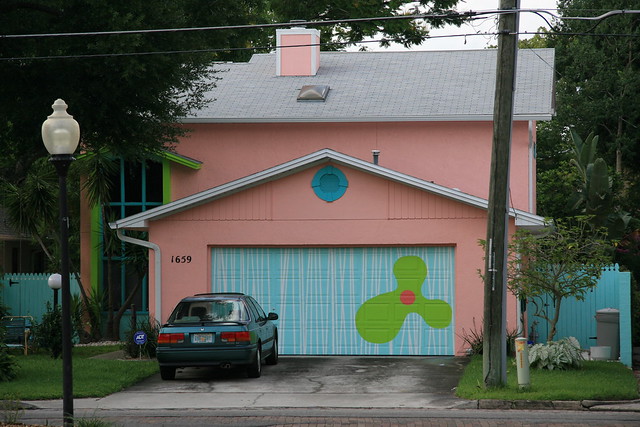
“Your best bet is to go neutral to appeal to the broadest range of buyers,” MacDonald says. That means no bright colors, no unusual trim choices, and no DIY garage-door mural (even if it is kind of adorable).

5. The barren wasteland

IMG_4294

Carolyn Williams/Flickr CC

One of the biggest mistakes you can make is to do nothing at all. No matter how clean, updated, and sellable your house is, there’s something extremely off-putting about not having any landscaping.

Houses with nothing green going on just seem, well, naked. And you don’t even have to do much—or spend much—to make your yard pop.

“Modern and minimal is always the way to go,” MacDonald says.

Add some simple shrubs that are native to your area, a few flower beds or fruit trees for some color, and voila—you’ve got curb appeal.

6. The overcrowded porch

Lawn Ornaments Gone Wild

Karen Apricot/Flickr

A big, comfy porch is like catnip to buyers on the prowl, but only if you’ve done it right. If your porch is overflowing with large chairs, planters, and hanging baskets, buyers are going to feel claustrophobic—not cozy.

“Keeping it simple is key,” MacDonald says. “You want to showcase the space without any clutter or extra pieces of furniture that don’t function specifically for the purpose of enjoying your porch.””

If you are getting ready to list your home this Spring, I suggest taking the time to make sure the outside of your home is just as inviting and show ready as the inside. Maybe even add a couple hanging baskets or potted plants to give a pop color for Spring. If you are thinking about selling your home and would like some advice on curb appeal, feel free to contact me.

Thanks for reading!


Spring Cleaning!

It is hard to believe that Spring is almost here! With all the snow and rain we have gotten this year it seems like Winter has lasted FOREVER! With all the harsh weather we had it is even more important to check off these Spring Cleaning items for your home. One of the best ways to maintain your home’s value is to take care of it and keeping up with annual maintenance.

Here is a great Spring Cleaning Checklist from Home Advisor. For full article click here.

Spring Maintenance Checklist

  • Gutters and downspouts: Pull leaves and debris from gutters and downspouts. Reattach gutters that have pulled away from the house. Run a hose on the roof and check for proper drainage. If leaks exist, dry the area and use caulking or epoxy to seal the leak.
  • Siding: Clean siding with a pressure washer to keep mold from growing. Check all wood surfaces for weathering and paint failure. If wood is showing through, sand the immediate area and apply a primer coat before painting. If paint is peeling, scrape loose paint and sand smooth before painting.
  • Exterior caulking: Inspect caulking and replace if deteriorating. Scrape out all of the eroding caulk and recaulk needed area.
  • Window sills, door sills, and thresholds: Fill cracks, caulk edges, repaint or replace if necessary.
  • Window and door screens: Clean screening and check for holes. If holes are bigger than a quarter, that is plenty of room for bugs to climb in. Patch holes or replace the screen. Save bad screen to patch holes next year. Tighten or repair any loose or damaged frames and repaint. Replace broken, worn, or missing hardware. Wind can ruin screens and frames if they are allowed flap and move so make sure they are securely fastened. Tighten and lubricate door hinges and closers.
  • Drain waste and vent system: Flush out system.
  • Hot water heater: Lubricate circulating pump and motor.
  • Evaporative air conditioner: Clean unit, check belt tension and adjust if needed. Replace cracked or worn belt.
  • Heat pump: Lubricate blower motor.
  • Foundation: Check foundation walls, floors, concrete, and masonry for cracking, heaving, or deterioration. If a significant number of bricks are losing their mortar, call a foundation professional. If you can slide a nickle into a crack in your concrete floor, slab or foundation call a professional immediately.
  • Roof: Inspect roof surface flashing, eaves, and soffits. Perform a thorough cleaning. Check flashings around all surface projections and sidewalls.
  • Deck and porches: Check all decks, patios, porches, stairs, and railings for loose members and deterioration. Open decks and wood fences need to be treated every 4-6 years, depending on how much exposure they get to sun and rain. If the stain doesn’t look like it should or water has turned some of the wood a dark grey, hire a deck professional to treat your deck and fence.
  • Landscape: This is a natural for spring home maintenance. Cut back and trim all vegetation and overgrown bushes from structures. Limbs and leaves can cut into your home’s paint and force you to have that side of the house repainted. A little trimming can save a lot of money and time.
  • Sprinklers: Check lawn sprinkler system for leaky valves, exposed lines, and improperly working sprinkler heads. If there is an area of your yard that collects too much water or doesn’t get enough, run the sprinklers to figure out the problem. If it’s not something you can fix yourself, call a professional before your lawn needs the water.


Remember, it’s better for your home and pocketbook to prevent a problem and be ahead of it then try and fix a disaster later on. Is there any Spring Cleaning items you do every year for your home that didn’t make this list? Let me know what they are!

Thanks for reading & happy Spring Cleaning.

1917 Emerald Way, Price Reduction!

1917 Emerald Way, Lynden

$549,900

~Gorgeous custom craftsman home in Homestead Golf Course community on coveted west side of town. With over 3,600 sq ft, every room in this home is spacious & well designed. Inviting great room w/soaring vaulted ceilings & stone fireplace open to gourmet kitchen & large dining room. Main floor master boasts fireplace, huge walk-in closet, & full ensuite w/walk-in custom tile shower & garden soaking tub to relax. A/C, irrigation, extra large garage, large covered back patio – too much to list!~

2765 Dawn Lane, Custer


2765 Dawn Lane, Custer, WA 98240

Priced @ $55,000

~3/4 acre parcel in quiet mid-county location with lots of leg work already done! Everything already prepped for your new manufactured home. With a 24′ x 48′ pad site, 3 bdrm septic installed, & community well most of the preliminary work has been done for you. Beautiful and peaceful setting awaits your final touches.~

Lynden’s Stats from June-Dec 2016

Lynden Stats

Here are the For Sale/Pending/Solds from June -December of 2016 for the Lynden Market.

If you just compare the last two months- November to December the For Sales went down by 20%, solds were down by 34% and pendings were down by 3%. These numbers just prove that the market definitely slowed down in December. Inventory has been lower so I know buyers are having a harder time finding a home.

In my opinion, during the month of January the market seemed to pick up again. We will have to wait and see when the new numbers come out!

Let me know if you have any questions.

Top 10 Most Important Things to Look for in Quality New Construction

Top 10 Most Important Things to Look for in Quality Construction

Being married to a contractor who’s been in construction for over 15 years really has taught me a lot about what to look for in a quality constructed new build. Add having seen close to 1,000 homes in the 8+ years I’ve been in real estate, I feel it would be beneficial to share what, in my opinion, are the top 10 things to look for in a well-built new construction.

With SO many new ‘builders’ coming out of the woodwork and trying their hands at constructing entire homes due to the market demand, as a buyer you need to know what questions to ask and what to notice. Here are my top 10 suggested things to watch for from the ground up:

  1. Foundation/Concrete – when was it poured? Was is during freezing weather when the ground may have been frozen? If so, were proper measures taken to ensure the ground it was poured on wasn’t frozen enough to shift and change once thawed? Were sufficient reinforcements installed during construction (rebar, wire mesh, etc.). You do not want to discover cracks after you own the home due to improper methods.
  2. Siding – Look for proper flashing above all windows & trim that may be exposed to the weather. Also, gaps in the siding larger than the typical width of a pinky may be problematic in the future. Flashing should’ve been installed behind these gaps as well, but just in case. *Quality tip: Enclosed soffits (where you cannot see the 2×4 in the eaves) are a bonus, usually deters bees from making hives and are more aesthetically pleasing.
  3. Exterior posts – were they installed w/concrete poured right around them? Anywhere concrete meets wood it will eventually rot it out if it was not properly flashed. Same goes for garage overhead door trim where it meets the garage & driveway concrete.
  4. Flooring – any tile/wood/laminate should only be laid over sanded plywood flooring. Any bows/bulges in the subfloor (flooring under your finishes) may cause squeaks/shifting in your flooring surface after installed. Membranes can help w/this as well.
  5. Windows – test that they open and shut with ease. If they were not shimmed properly when installed, they may be pinched when opening/closing or be difficult to open/shut.
  6. Interior trim – especially if painted white trim, are the corners all mitered together closely, are all the edges where it meets the wall caulked, are the holes filled? This is of course just cosmetic, but when you’re buying and paying for brand new this should be done right.
  7. Cabinets – Usually a main focus in a home, proper install is key. Are the doors hung square, is the crown mitered and installed correctly, do they have crown, are the drawers dovetail or stapled/glued, is there door hardware, does the island move/shake (if there is one), are they tall enough for you in the bathrooms? Soft close doors & drawers are a nice feature if included. Extra tall upper cabinets can add desired storage as well.
  8. Tile – tile can be very tricky to install and grout properly. This should always be done by a professional when new construction. Tile showers should always have a waterproof membrane painted on before tiling & a special additive in the grout for protection. Grout where it meets counters/walls should be caulk instead, otherwise it nearly always cracks over time.
  9. Warranty – It is commonly believed there is a WA state required 1 year warranty for new construction. While there is a ‘limited implied warranty of habitability’ in WA state, there are many requirements for it to be applicable & it can be difficult to enforce. Many builders freely offer their own Builder’s Warranty. Be sure to ask if one is included with your purchase.
  10. Last, but not least – Find out about the builder. Google them. Have they built other homes before? Are they licensed & bonded? Do they have references from past buyers/customers?

Feel free to reach out with questions anytime. Buying in general can be very overwhelming, having the right knowledge and expertise available to guide you in one of the largest purchases you will ever make is VERY important!

Thanks for reading! 

Disclaimer: Danielle Groeneweg has written this article as an informative opinion only.

A HUGE THANK YOU!

Bellwether Office Sign


 It has been a busy and exciting past month as we got ready for the official Grand Opening of the Lynden Bellwether office. I am so grateful for everyone who was able to stop by yesterday during the open house. It was so nice to see lots of familiar faces, reconnect and receive so many signs of encouragement.

If you weren’t able to stop by during the event, feel free to swing by anytime. I’m always up for a coffee & a visit.

10 Anti-Burglary Tips

I hope everyone had a great New Years and holiday season. It sure was busy! I feel like this week is finally back to the normal work schedule. I ran across this great article from the Realtor Magazine that has some great tips for anyone that is currently selling their home on the active market. Just a few extra precautions every home owner can use to keep their home and family even better protected from burglaries. This list of 10 Tips was taken from an article written by Tracey Hawkins from here.

“10 Anti-Burglary Tips for Your Sellers

  1. Maintain your property. Especially in the wintertime, many people stay indoors and neglect issues such as peeling trim or an overgrown yard. But if the home looks unkempt, thieves may think it’s abandoned and, therefore, an easy target. Shoveling your walkways to clear them of snow and debris and removing holiday decorations and fallen tree branches in a timely manner will signal that the home is occupied.
  2. Know your neighbors. Many people don’t really know their neighbors; it’s more than just saying hi and being friendly. Invite them over to see your home before it goes on the market, and introduce them to the people they may see regularly stopping by during this time (especially your agent). Then they’ll know who is and isn’t supposed to be at your home and can better assess when there may be a threat while you’re gone.
  3. Assess your home’s vulnerability. Walk to the curb and face your house. Ask yourself, “How would I get in if I were locked out?” The first thing you think of, whether it’s the window with a broken lock or the door that won’t shut all the way, is exactly how a thief will get in. Think like a burglar, and then address the issues that come to mind.
  4. Respect the power of lighting. Criminals are cowards, and they don’t want to be seen. The house that is well-lit at night provides a deterrent because thieves don’t want the attention and the potential to be caught by witnesses. It’s wise to invest in tools that make nighttime light automation easy. That includes dusk-to-dawn adapters that go into existing light fixtures and motion detectors. But beware of leaving your exterior lights on at all times, which signifies the occupant is gone for an extended period of time.
  5. Use technology to make your home look occupied. In addition to lighting, smart-home technology has made it easier to make it appear like people are home, even when they’re not. Systems that remotely control lighting, music, and appliances such as a thermostat can help you achieve this. Though not considered smart-home tech, simple lamp timing devices available at hardware stores are also good for this purpose.
  6. Yes, it has to be said: Lock your doors. It’s amazing how many people think they live in a safe-enough neighborhood not to have to lock their doors when they leave. Some facts sellers should know: In 30 percent of burglaries, the criminals access the home through an unlocked door or window; 34 percent of burglars use the front door to get inside; and 22 percent use the back door, according to the FBI Uniform Crime Report.
  7. Reinforce your locks. A good door lock is nothing without a solid frame. Invest in a solid door jam and strike plate first, and then invest in good locks. Know the difference between a single-cylinder and a double-cylinder deadbolt. Double-cylinder deadbolts are recommended because they require a key to get in and out. For safety and emergency escape purposes, you must leave the key in when you are home. But double-cylinder locks are against regulations in some places, so check with your local police department’s crime prevention office.
  8. Blare the sirens. Burglars are usually in and out in less than five minutes, and they know police can’t respond to an alarm that quickly. Their bigger concern is witnesses to their crime. For that reason, an external siren is invaluable, whether as part of a monitored security system or a DIY alarm. Even if you don’t have an alarm, it’s not a bad idea to invest in fake security signs and post them near doors.
  9. Consider surveillance cameras. The Los Angeles Police Department started a program encouraging homeowners to install a device called Ring, a doorbell with video surveillance capability that allows homeowners to view what’s outside their door on their smartphone, in a neighborhood that was a target for burglaries. After Ring was installed in hundreds of homes, the burglary rate dropped by 55 percent, according to reports. Most state and local regulations require posting a warning that people are being recorded. (But again, this can be effective even if you don’t actually have the cameras installed!)
  10. Mark your valuables and record details. Use invisible-ink pens or engravers to mark identifying information (driver’s license or state ID numbers) on items. Log serial numbers and take photos of your belongings. Check to see if your police department participates in the Operation Identification program. They will have stickers for you to place on doors or windows warning would-be thieves that your items are marked. These steps may prevent them from pawning or selling stolen items and can help you reclaim recovered belongings.”

I hope you find some of this tips to be useful and pick a few to put into practice.

Let me know if you have any additional tips to add.

Thanks for reading!